

Quick Summary
Frozen protein waffles stay fresh for several months when kept sealed at a steady 0°F (-18°C). Six Pack Gourmet Bakery's Classic Bundle can be frozen for up to six months, as long as the waffles stay in the freezer the whole time.
- Keep frozen protein waffles held continuously at 0°F (-18°C) so safety is not a concern.
- Best quality lasts the first two to three months, when edges still crisp in a toaster.
- Past the printed date, waffles stored well are still safe but may taste dry.
- Cool fresh waffles completely and freeze them in a single layer before bagging.
- Thaw waffles in the refrigerator and do not refreeze any that were thawed at room temperature.
Table of Contents
- How Long Frozen Protein Waffles Stay Fresh in the Freezer
- Freezing Protein Waffles Correctly: Single Layer, Airtight, Cooled
- How to Store Frozen Waffles After Opening the Package
- Can You Keep Frozen Waffles in the Fridge? Timelines and Limits
- Thawing, Refreezing, and Leaving Waffles Out at Room Temperature
- How to Reheat Frozen Protein Waffles Without Losing Crunch
- Spotting Spoiled or Freezer-Burned Waffles Before You Eat Them
- Setting Up Your Freezer Stash for Busy Weeks
- Frequently Asked Questions
How Long Frozen Protein Waffles Stay Fresh in the Freezer
Last Updated: November 14, 2026
Frozen protein waffles stay fresh for several months when they are kept sealed and at a steady freezer temperature. Six Pack Gourmet Bakery's Classic Bundle can be frozen for up to six months, provided the waffles stay in the freezer the whole time.
The most useful way to answer this question is to split it in two, because safety and quality run on different clocks.
Safety timeline. A frozen protein waffle kept at 0°F (-18°C) does not support bacterial growth, so the safety clock is long. Food safety guidance generally treats food held continuously at 0°F as safe, which means the package date is a quality date rather than a throw-it-out date. The real safety risks come from temperature abuse, a freezer that drifts above 0°F, a package left on the counter, or a thaw-and-refreeze cycle, not from the number of months on the box.
Quality timeline. Flavor, crunch, and aroma degrade much faster than safety does. A common pattern is:
- Best quality: the first two to three months, when the outside still crisps up in a toaster and the interior stays tender.
- Good quality: months three through six, which is the window most packages print. Expect slightly softer edges and a milder aroma.
- Acceptable but declining: past the printed date, if the waffles were stored well. They are still safe, but they may taste dry, pick up freezer odors, or brown unevenly.
Does protein content change the advice? Not the safety advice.
Read your own package first. Date codes and storage directions vary by brand and by product type. A frozen protein waffle, a homemade waffle, and a shelf-stable waffle are three different products with three different windows, so treat the printed "best by" date as the manufacturer's quality estimate and the 0°F rule as the safety backstop.
Freezer temperature matters more than most people expect. A freezer that holds a steady 0°F protects texture better than one that warms up and cools down often. Keep waffles toward the back of the freezer, away from the door, where temperatures stay more stable, and check the freezer with an appliance thermometer rather than trusting the dial.
Shelf life also depends on how the waffles were stored before freezing. Waffles that were already near the end of their fresh window will not last as long in the freezer. Freezing them early gives you the best result.
The article breaks the timeline into a safety clock and a quality clock, each with its own window.
| Stage | Window | Note |
|---|---|---|
| Best quality | First two to three months | Outside still crisps in a toaster |
| Good quality | Months three through six | Slightly softer edges, milder aroma |
| Acceptable but declining | Past the printed date | Safe if stored well, may taste dry |
| Safety backstop | Held continuously at 0°F (-18°C) | Temperature abuse is the real risk |
| Classic Bundle | Up to six months | Six Pack Gourmet Bakery product |
Freezing Protein Waffles Correctly: Single Layer, Airtight, Cooled
Freezing protein waffles the right way protects both crunch and flavor. Start by letting any fresh waffles cool completely on a rack. Warm waffles release steam, and that moisture turns into ice crystals inside the bag.
Once cool, follow these steps:
- Lay the waffles in a single layer on a tray or plate.
- Freeze them for about 30 minutes until they feel firm.
- Stack them into an airtight freezer bag or container.
- Press out as much air as you can before sealing.
- Label the bag with the date you froze them.
Freezing in a single layer first keeps waffles from sticking together. It also makes it easy to pull out just the number you need for breakfast.
Watch out: Putting warm waffles straight into a sealed bag traps condensation. That moisture leads to sogginess and freezer burn, so always cool them first.
How to Store Frozen Waffles After Opening the Package
Once you open a package of frozen protein waffles, storage habits change. Air and moisture get in every time the bag is opened, so the waffles can dry out or pick up odors faster.
To keep opened waffles fresh:
- Squeeze out extra air before resealing the bag.
- Use a clip, a zip-top bag, or a sealed container.
- Return the waffles to the freezer right after taking out what you need.
- Use opened waffles within a few weeks for the best texture.
A common mistake is leaving the bag open on the counter while you make breakfast. Even a short time at room temperature can start to soften the waffles and invite freezer burn later.
Can You Keep Frozen Waffles in the Fridge? Timelines and Limits
Yes, you can move frozen waffles to the refrigerator to thaw, but the fridge is not a long-term storage spot. Thawed waffles spoil faster than frozen ones, so they should be eaten soon after thawing.
As a general guide:
- Frozen in the freezer: Keep for months, following the package window.
- Thawed in the fridge: Eat within a few days.
- Cooked and then refrigerated: Eat within about three to four days.
Plan ahead by moving the waffles to the fridge the night before. This gives them a slow, even thaw and keeps the texture better than a rushed defrost.
Thawing, Refreezing, and Leaving Waffles Out at Room Temperature
Thawing is where many people run into trouble. Leaving waffles on the counter lets them sit in the temperature range where bacteria grow fastest. Common food safety guidance advises against leaving perishable food out for more than two hours.
For safe thawing:
- Thaw in the refrigerator, not on the counter.
- Use thawed waffles within a few days.
- Do not refreeze waffles that were thawed at room temperature.
Refreezing is allowed only if the waffles were thawed in the refrigerator and still feel cold. Each freeze and thaw cycle makes the texture worse, so refreeze only if you truly must.
Keep track of how long the waffles have been out. If they sat at room temperature for more than two hours, throw them away.
How to Reheat Frozen Protein Waffles Without Losing Crunch
The best way to bring back crunch is a toaster. Toasting heats the waffle quickly and dries the outside just enough to restore that snap.
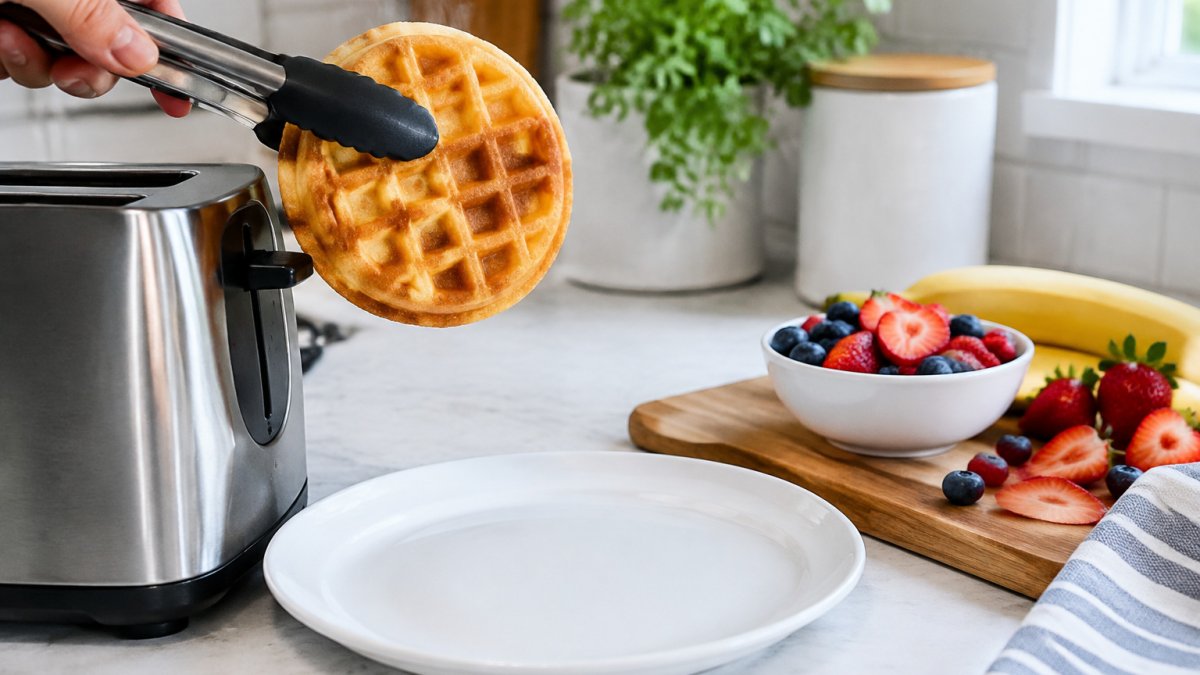
Try these methods:
- Toaster: Best for crispy edges. Start on a medium setting and check after one cycle.
- Toaster oven: Good for several waffles at once. Heat at 350°F until warm and crisp.
- Microwave: Fastest, but it softens the texture. Use for a quick warm-up, not for crunch.
For the crispiest result, reheat waffles straight from the freezer or thawed, and eat them right away. Waffles that sit after toasting lose their crunch fast.
Watch out: Microwaving frozen waffles for too long can make them rubbery. Use short bursts and check each time.
Spotting Spoiled or Freezer-Burned Waffles Before You Eat Them
Freezer burn is the most common quality problem, and it is worth understanding what it actually is. When air reaches the waffle surface, moisture migrates out of the food and forms ice crystals on the packaging or on the surface itself. The waffle dries out, and the damaged spots turn pale, grayish, or leathery. Freezer burn is a quality defect, not a safety defect, the waffle is still safe to eat, but it tastes dry and stale and will not crisp up the same way.
Judge the package before the waffle. A little frost inside a sealed bag is normal. What matters is whether the seal is intact. Look for:
- Heavy ice crystals or a solid frost block inside the bag, which usually means air and moisture have been cycling in and out.
- Torn or punctured plastic, or a zip seal that no longer closes cleanly.
- Waffles frozen into a clump, which suggests they were warm or wet when they went in.
- A package that has clearly thawed and refrozen, such as a soft, misshapen block with ice between the waffles.
Judge the waffle itself. Surface ice and a few pale patches are quality issues. These are safety issues:
- An off, sour, or rancid smell that does not go away after toasting.
- Mold in any color, slime, or sticky patches.
- A waffle that is soft and warm rather than frozen or evenly thawed.
- Any waffle that sat above 40°F for more than two hours.
What to do with each finding. For freezer burn alone, trim the damaged edges or toast the waffle a little longer to improve the texture. For a compromised seal with no other problems, move the waffles to a new airtight bag and use them soon. For mold, off smells, or a known temperature-abuse event, throw the waffles out, quality defects and safety defects are not the same thing, and only one of them is worth a gamble.
Watch out: Do not assume that a waffle is fine just because it is frozen. Freezing pauses bacterial growth but does not undo time spent warm, so a package that thawed in transit or on the counter and was refrozen can look normal and still be a poor bet.
Setting Up Your Freezer Stash for Busy Weeks
A freezer stash makes it easy to grab breakfast on a hectic morning. Start with the Classic Bundle (24 waffles), which is a solid choice for a steady supply. If you need vegan options, the Classic Vegan Bundle (24 waffles) keeps plant-based waffles on hand the same way.
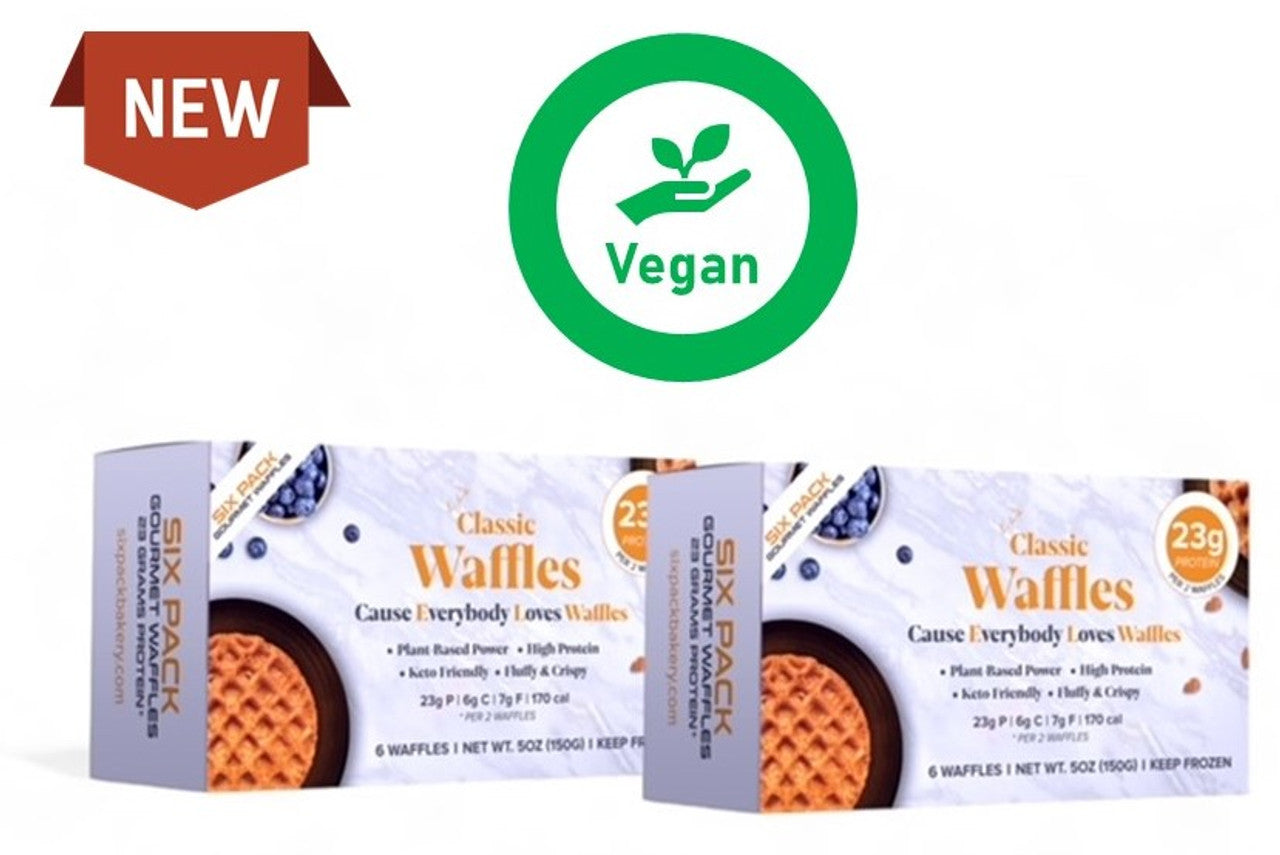
To keep your stash organized:
- Label each bag with the freeze date.
- Store the newest bags at the back and use older ones first.
- Pull out only what you need for the next few days and refreeze nothing else.
- Keep a second bag ready so you never run out.
With a little planning, your frozen waffles stay fresh, tasty, and ready whenever you need them. We recommend starting with a bundle and building your routine around it, since a well-stocked freezer makes busy weeks much easier.
Ready to stock your freezer? Shop Six Pack Gourmet Bakery's waffles and get breakfast ready for the week. Every order comes with our 100% satisfaction guarantee.
Frequently Asked Questions
How long do frozen protein waffles stay fresh in the freezer?
Six Pack Gourmet waffles can be frozen for up to six months. Keep them in the freezer the whole time, and label the bag with the freeze date so you can use older packs first.
Can you keep frozen waffles in the fridge instead of the freezer?
Waffles that have been thawed can be kept in the refrigerator, but they will lose crispness faster than they would at room temperature sealed in a package. Once thawed, refrigerated waffles are best eaten within a few days. Keep them in a sealed container so they do not absorb moisture from other foods. Do not refreeze waffles that have thawed fully and sat for a long time, since repeated temperature changes reduce quality.
Can you eat frozen waffles that were left out overnight?
Frozen waffles that have been left out at room temperature for more than two hours should not be eaten. Bacteria can grow quickly in the danger zone between 40°F and 140°F, and a waffle that thawed overnight has spent far longer than that range. Toss waffles left out overnight rather than trying to refreeze or reheat them. Keeping packs sealed until you are ready to cook helps you avoid this problem.
How can you tell if frozen protein waffles have gone bad?
Look for visible frost crystals, dry or discolored patches, and a stale or off smell after toasting. Freezer burn makes a waffle tough and leathery but does not usually make it unsafe, so the texture is a quality issue rather than a food safety one. A sour smell, mold, or slimy texture means the waffle should be thrown out. When in doubt, discard the waffle, especially if it thawed and sat out.
